Looking for a horse-friendly property in Greenwood can feel exciting right up until the details start piling up. A beautiful house and open acreage may look perfect at first glance, but the real value of an equestrian property comes down to how the land can actually be used day to day. If you want a property that works for your horses now and still makes sense long term, it helps to know what to check before you buy. Let’s dive in.
Why zoning matters first
In Greenwood, one of the first things you should verify is the parcel’s zoning. In Albemarle County, permitted uses depend on the property’s zoning designation on the official Zoning Map, and setbacks also depend on the zoning district and parcel ID.
That matters because two properties with similar acreage can have very different rules. Albemarle County’s comprehensive plan places about 95% of the county in the Rural Areas, which are intended to protect agriculture, forestry, scenic resources, and low-density rural land use.
How horse use can vary legally
In the Rural Areas, agricultural operations are a by-right use, and county guidance defines them broadly enough to include the production of animals. Even so, your intended use still matters.
A private horse property, a commercial boarding or breeding setup, and a parcel that may host agritourism or events can fall under different rules. If you have plans beyond personal use, it is smart to confirm early whether additional county review, clearance, or permits may apply.
Understand taxes before you assume savings
A common question is whether keeping horses can reduce property taxes. In Albemarle County, pleasure horses do not qualify for agricultural use-value assessment.
For land-use tax deferral, qualifying agricultural land generally must have at least five cleared acres, meet a $1,000 annual gross-sales threshold, and be used for commercial production. Homesites and non-agricultural improvements are excluded, so it is important not to assume that simply owning horse property creates tax benefits.
Check whether the land works for horses
A horse-friendly property is not just about total acreage. It is about whether the land can stay usable, safe, and productive under regular turnout and pasture pressure.
Virginia Tech guidance recommends at least two acres per horse to maintain healthy sod and good groundcover. That does not guarantee easy pasture management, but it gives you a practical starting point when comparing properties.
Look at pasture condition
Pasture quality matters as much as pasture size. Soil testing, correcting pH, fertilizing based on soil-test recommendations, and rotational grazing all help support healthier groundcover.
If a property already shows signs of overgrazing, muddy gateways, or thin vegetation, you may be looking at more work and expense after closing. A pretty field from the road does not always tell you how well the land performs through the seasons.
Be cautious with steep land
Greenwood’s rural landscape can include rolling and sloped terrain, and steeper land often needs more careful planning. Virginia Tech notes that steeper ground may require separate fencing and more deliberate grazing management.
That does not mean sloped properties are off the table. It simply means you should think through how horses will move across the land, how turnout will be divided, and whether the layout supports safe, practical use.
Reliable water is a must
Water can be one of the biggest deal-breakers on rural property. If the home relies on a well, spring, or cistern, the homeowner is responsible for routine testing and maintenance.
For horse use, the real question is not just whether water exists on the property. You also want to know whether the system can reliably deliver clean water to the house, barn, and turnout areas year-round.
Questions to ask about water service
When you tour a horse-friendly property, ask practical questions such as:
- What is the well flow rate?
- How old is the pump, and has it been replaced?
- What freeze protection is in place?
- Is there a backup plan if the power goes out?
- How is water delivered to barns, paddocks, or trough locations?
These details can make a major difference in daily management. A property that works well in mild weather may still be difficult in winter or during outages if the setup is limited.
Fencing and layout shape usability
It is nearly impossible to manage grazing well without adequate fencing. A practical horse property usually includes multiple pastures or turnout areas so the land can rest between uses.
This is one reason layout matters almost as much as acreage. A parcel with several usable sections can be more functional than a larger tract with awkward access, poor divisions, or limited turnout flexibility.
What to look for in the layout
As you evaluate properties, pay attention to whether the land supports:
- More than one pasture or turnout area
- Easy movement between barn and paddocks
- Safe trailer access and turning space
- Separation of heavy-use areas from better pasture ground
- Room for future improvements, if needed
A workable layout helps with both horse care and long-term property value. Buyers often respond to function just as much as appearance.
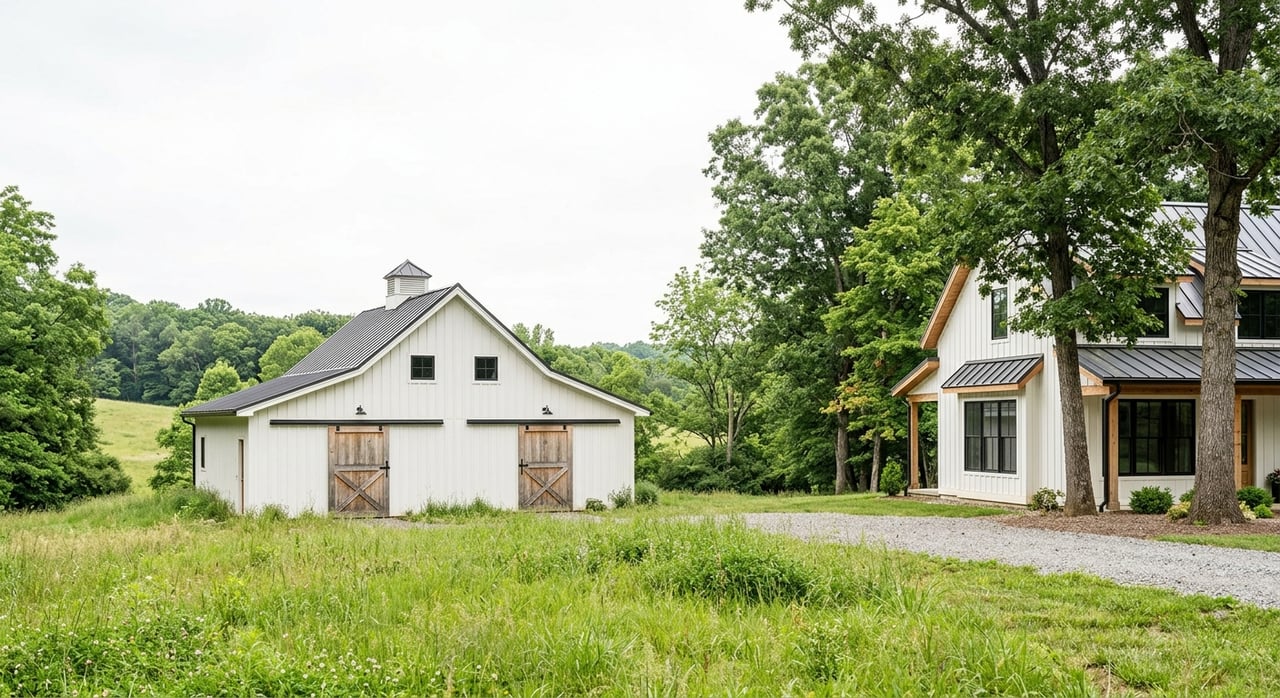
Barns, sheds, and arenas need closer review
A property may have a barn, run-in shed, tack space, manure storage area, or riding ring, but you should not assume every structure was added under the same rules. In Albemarle County, most construction or alteration work requires a building permit.
There are some exceptions. Small tool sheds and playhouses under 256 square feet are treated differently, fences generally do not need a building permit, and Virginia law exempts some qualifying farm buildings and structures from the Building Code.
Why permits still matter
If an existing barn was built as a qualifying farm structure, that can affect how it was regulated. If you plan to build, expand, or convert structures after purchase, you should verify whether the intended work will require full permitting.
This is especially important if you want more than a simple private setup. The rules for a basic run-in shed can be very different from the rules for a more substantial barn or other specialized improvement.
Watch for buffers, streams, and floodplain issues
Environmental constraints can limit where you place horse improvements. Before you budget for a barn site, riding arena, or other land-disturbing work, the parcel should be checked for setbacks, floodplain issues, and buffer overlays.
In Albemarle County, the County GIS is the starting point for this research, and an official zoning determination may be needed if a proposed use is unclear. This step can save you from expensive surprises later.
Stream buffers can affect plans
For properties near water, buffer rules can be decisive. In Rural Areas, riparian buffers during land-disturbing activity generally extend 100 feet on both sides of perennial or intermittent streams and contiguous wetlands, or to the 100-year floodplain, whichever is wider.
The county also states that farm buildings, horse rings, and other recreational improvements are not exempt from Water Protection Ordinance permitting. If a parcel includes streams or wetlands, fence placement and future construction plans should be reviewed carefully.
Thinking about events or added uses?
Some buyers want more than personal horse use. If you plan to host clinics, shows, or other non-agricultural gatherings, county rules may add another layer of review.
Albemarle County says agritourism or events may require an Agricultural Operations Clearance or, in some cases, a Special Use Permit depending on parcel size, attendance, and vehicle trips. If that possibility is part of your long-term vision, it is best to investigate it before you purchase.
Future flexibility can affect value
Horse properties are often valued by function, not just by house size or total acreage. Parcel-specific factors such as soil quality, rural amenity value, and proximity to urban areas can shape value.
Improved rural properties are also often appraised differently from standard houses. Specialized features like barns, livestock facilities, and other outbuildings may be considered separately from bare land, especially when comparable sales are limited.
Usability often drives resale
When it comes time to resell, buyers usually respond to usability. Good pasture, reliable water, sound fencing, and flexible outbuildings can help a property appeal to a wider audience.
On the other hand, poor drainage, awkward topography, or outdated structures can narrow the buyer pool. If you buy with both daily livability and future resale in mind, you will often make a stronger long-term decision.
Don’t overlook development rights
If you are thinking about adding a second dwelling or subdividing in the future, development rights become important. In Albemarle County’s Rural Areas, additional dwellings or subdivision into smaller parcels depend on theoretical development rights.
Without them, the minimum lot size is 21 acres. For buyers who want flexibility later, this can be a major factor in how a property fits their goals.
A smart way to evaluate Greenwood horse property
When you are comparing horse-friendly properties in Greenwood, it helps to think beyond the listing photos. The strongest properties usually combine a legal path for your intended use, workable pasture, dependable water, compliant fencing and buffers, and improvements that support how you actually plan to live.
That kind of evaluation takes local knowledge and careful review, especially in rural parts of Albemarle County where zoning, land use, and property function all matter. If you want a steady, hands-on guide as you search for the right fit, Sherry Millard can help you evaluate Greenwood properties with a practical eye and local insight.
FAQs
How much land do you need for horses in Greenwood, VA?
- Virginia Tech recommends at least two acres per horse to maintain healthy sod and good groundcover, though actual needs can vary based on pasture quality, management, and terrain.
Can horse property in Albemarle County qualify for lower taxes?
- Not if the horses are kept only for pleasure. Albemarle County’s land-use tax deferral requires commercial agricultural use, qualifying acreage, and minimum gross sales.
Do barns and horse structures need permits in Albemarle County?
- Usually yes for most structures, although some small sheds are treated differently, fences generally do not need a building permit, and certain qualifying farm buildings may be exempt from the Virginia Building Code.
Can you build a riding arena near a stream in Greenwood?
- Possibly, but stream buffers and Water Protection Ordinance rules may affect where land-disturbing work can occur, and horse rings are not exempt from permitting requirements.
Can you add a second dwelling on rural horse property in Albemarle County?
- It depends on the parcel’s theoretical development rights. In Rural Areas, those rights are important if you want an additional dwelling or future subdivision.