WMRA reported that a retired couple in Albemarle County kept one horse, a twenty-six-year-old mare, on land they'd owned for years. When the county came back with a rollback tax bill, the couple paid it and then challenged it, arguing the use of their property hadn't changed at all. The dispute centered on an open space use agreement that had quietly expired in 2021, and the couple wanted their $17,000 back. As of the story's airing, the county hadn't issued a final ruling.
That case happened elsewhere in the county, but the mechanism behind it runs through nearly every large parcel in Greenwood. If you're comparing acreage listings here against Crozet, Free Union, or anywhere else in western Albemarle, consider the county's land-use tax program alongside the purchase price. A change in qualifying land use can lead to rollback taxes.
What the Discount Actually Is
Virginia's Use-Value Tax Deferral Program lets land that's actively farmed, forested, or held as open space get taxed on what it earns rather than what it would sell for. Albemarle County has run a version of this since 1974, and it explains why so many Greenwood properties, most of them sitting on five, twenty, or well over a hundred acres, carry tax bills that look small next to their listing price. Albemarle County says a homesite carved out for the residence, typically around two acres, still gets taxed at full market value no matter what.
Qualifying isn't automatic. Albemarle County says a parcel needs at least five acres in agricultural or horticultural use, or twenty acres in forest. Owners must document at least $1,000 a year in qualifying revenue from crops, livestock, or a vineyard. Once enrolled, the county reassesses the qualifying acreage. Virginia Tech's Land Use-Value Assessment Program calculates that value using average net farm returns, and for a typical Albemarle rotation of corn, wheat, and soybeans, that return runs under $300 an acre. Compare that to what an acre of view-worthy Blue Ridge foothill land actually commands on the open market in a place like Greenwood, and the gap between use value and fair market value becomes the whole reason the tax bill looks the way it does.
The Gap Is Growing, Not Shrinking
Albemarle's countywide tax base rose 6.17 percent in the 2026 reassessment cycle, driven by continued appreciation in the housing and land market. Use-value assessments don't move with that appreciation. They're tied to farm income, which hasn't been rising at anything close to the same rate. Every year fair market values climb and use values stay anchored to what a soybean crop earns, the deferred amount sitting on each qualifying parcel gets larger. Countywide, Albemarle's own reporting put the deferred property value inside the program at roughly $1.7 billion, generating close to $15 million a year in taxes the county isn't currently collecting on that acreage.
That deferred amount doesn't disappear.
What Actually Triggers the Bill
County Assessor Peter Lynch put it plainly to the Crozet Gazette: if land shifts to a non-qualified use, such as being developed for housing, the owner owes rollback taxes for the current year and five previous years.
Albemarle County requires revalidation every two years, and Lynch's office has actively enforced the program since a land-use administrator position was created in 2018 specifically to check whether enrolled parcels are still meeting their qualifying purpose. Since that role began, according to Lynch, the county has properly captured rollbacks as owners change land use, something that had gone largely unchecked before.
The 2026 Revalidation Window Already Closed
If you're closing on a Greenwood property this fall, the paperwork question isn't hypothetical. The deadline to revalidate for the 2026 tax year, without a late fee, was September 1, 2025. Owners who missed that date had until December 5, 2025 to file with a $125-per-parcel late fee attached.
Before you write an offer on a Greenwood parcel right now, it's worth asking directly whether the seller filed on time, and asking to see the confirmation. A property that looks like it's still enrolled on last year's tax bill isn't necessarily enrolled today.
Why Greenwood Carries More of This Risk Than Most of the County
Greenwood's housing stock leans heavily toward the kind of acreage this program was built for. Working vineyards sit alongside horse pasture and standing timber throughout the area, and the five-acre and twenty-acre thresholds that trigger eligibility are thresholds most Greenwood listings clear without effort. King Family Vineyards, founded by the King family in 1996 on what was originally intended as a polo field, still operates as a working vineyard in the same corner of western Albemarle, the kind of active agricultural use that keeps large tracts qualified. Blandemar Farm Estates markets land with existing development rights alongside an active vineyard, both of which carry direct implications for how that acreage is taxed today and what happens to that tax treatment if a future owner exercises those rights. Even a property like the historic Mirador estate, built in 1842 and once the childhood home of Nancy Astor, sits on landscaped grounds and working farm buildings that fall under this same set of rules.
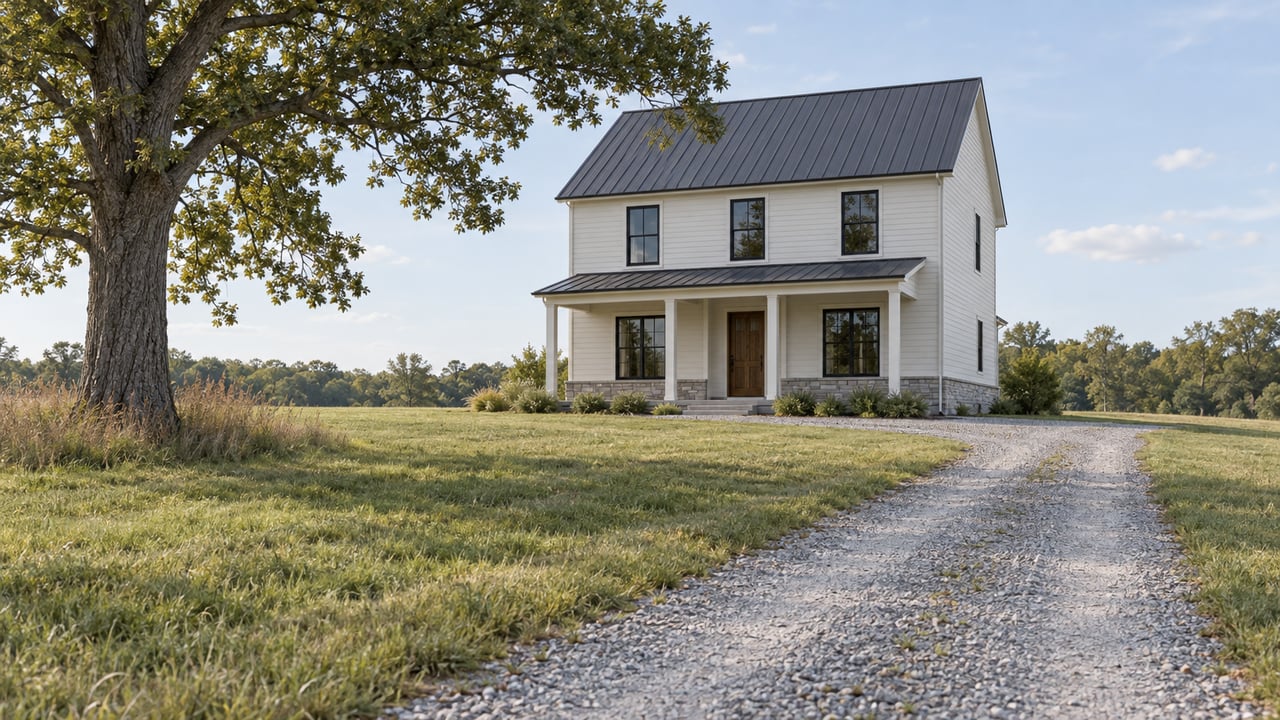
The program's status is reflected in tax records and revalidation filings, rather than in professional listing photos.
Questions Worth Asking Before You Write an Offer
- Is this parcel currently enrolled in the Use-Value program, and under which category: agricultural, horticultural, forest, or open space?
- When was the last revalidation filed, and is the seller current for the 2026 cycle?
- How many acres are excluded as the homesite, and how many acres actually carry the qualifying use?
- Does your intended use for the land, whether that's a horse ring, a second dwelling, a cleared view corridor, or a change in what's grown or grazed, still meet the qualifying standard?
- Has the county's assessor's office provided an estimate of what a rollback would cost if the qualifying use ended the day you took title?
That last question is one the county will actually answer if you ask before you make a change, not after.
A Couple of Things Buyers Often Get Wrong
Does a change in ownership by itself trigger the rollback? No. Virginia code is specific that a sale alone doesn't create rollback liability as long as the new owner doesn't rezone the land to a more intensive use or convert it to a non-qualifying use. The risk isn't in buying the property. It's in what you do with it afterward.
What has happened with rollback appeals? Lynch has noted that during his time in the role, the Board of Equalization has never actually granted an appeal on a rollback determination.
Acreage in Greenwood carries real financial texture underneath the view and the vineyard proximity that draw people there in the first place. If you're weighing a parcel here against something in Crozet or Free Union, the tax enrollment status is worth pricing into your decision with the same seriousness you'd give a well test or a septic inspection. Sherry Millard has spent two decades walking Albemarle County acreage with buyers before contracts get signed, and can help you read a parcel's land-use standing before you're the one holding the liability.
This article is general information, not legal, tax or financial advice. Consult a qualified professional about your situation.